
Something About Open Pores?
Open Pores:
A solid material’s open pores are empty gaps or cavities that let fluids (liquids or gases) flow through and are linked to the external surface or other internal pores. In many natural and manufactured materials, these pores are essential to determining physical attributes, including permeability, absorption, diffusion, mechanical strength, and reactivity.
🔍 Definition :
Open pores are interconnected voids within a solid that allow stuff (such as water, air, oil, or gas) to flow or exchange by connecting to other pores
networks or being accessible from the outer surface. Their capacity to contribute to fluid movement and permeability sets them apart from closed pores, which are completely separated from the outside
surface.
There are Types of open pores:
There are three typical morphological categories for open pores:
Examining U, O, and Y-type open Pores in DepthSurface analysis, such as scanning Electron microscopy, uses cross-sectional forms to categorize these pore types.
Different shapes have distinct effects on material performance, surface interactions, and fluid dynamics.
The shapes or morphologies of open pores in cross-section are probably what you mean when you inquire about types of open pores, about “U, O, Y”. Often employed in porous materials (such as ceramics, membranes, or foams), this categorization
relies on the shape of the pore channel to determine features like filtration and flow.
🔍 Overview of U, O, and Y Open Pore Shapes:
Open pores are attached to a solid’s surface and permit the entry or escape of fluids or gases in porous materials, and surface engineering. In applications including filtration, catalysis, absorption, and biological scaffolds, the form of these holes is crucial in defining the material’s functioning.
U, O, and Y are the open pore shapes:
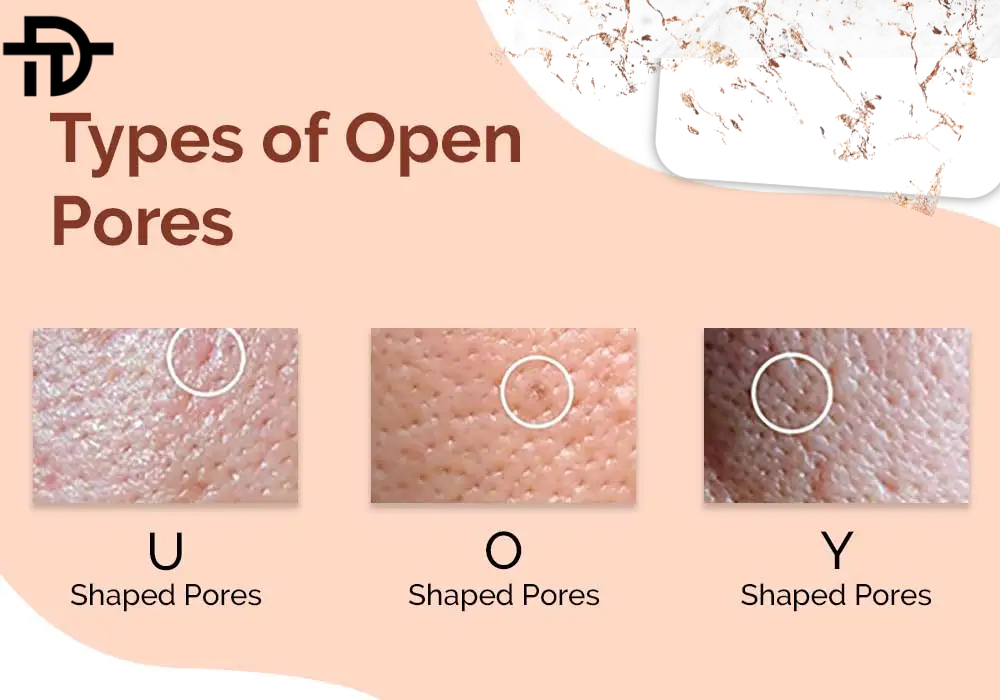
1. Pores of the U type:
Shape: Open at the top, like the letter “U.”
Distributions: Shallow, cup-shaped chambers open on the top but closed at the bottom, often found on slightly pierced or etched surfaces. A shape like the letter “U” with a closed bottom and an open top.
Structure: pit-like, shallow, or bowl-like.
Function: Restricted fluid flow; might help with surface reactions or trap particles.
2. Pores of the O Type Shape:
oval or round, like the letter “O”
Features: Completely enclosed elliptical or circular tunnels; Open at both ends (attached to both surfaces or additional pores); Suitable for constant flow.
Function: Perfect for filtration and permeability.
Shape: Round or elliptical in cross-section, like the letter “O.”
Structure: Protruding through the material, completely open, and often cylindrical.
Function: Enables constant fluid flow, perfect for permeability or filtering.
3.The Third One is Y-Type Pores:
Shape: Branching, like the “Y” letter.
Distributions: More intricate connection; One surface aperture that branches into two or more interior channels;
Function: may improve flow distribution and surface area, but may trap particles.
Shape: like the letter “Y”; a single aperture on the surface with interior branches.
Structure: intricate, with many interior channels branching off a single surface aperture.
Function: Increases surface area and may enhance the capacity for diffusion or adsorption.
