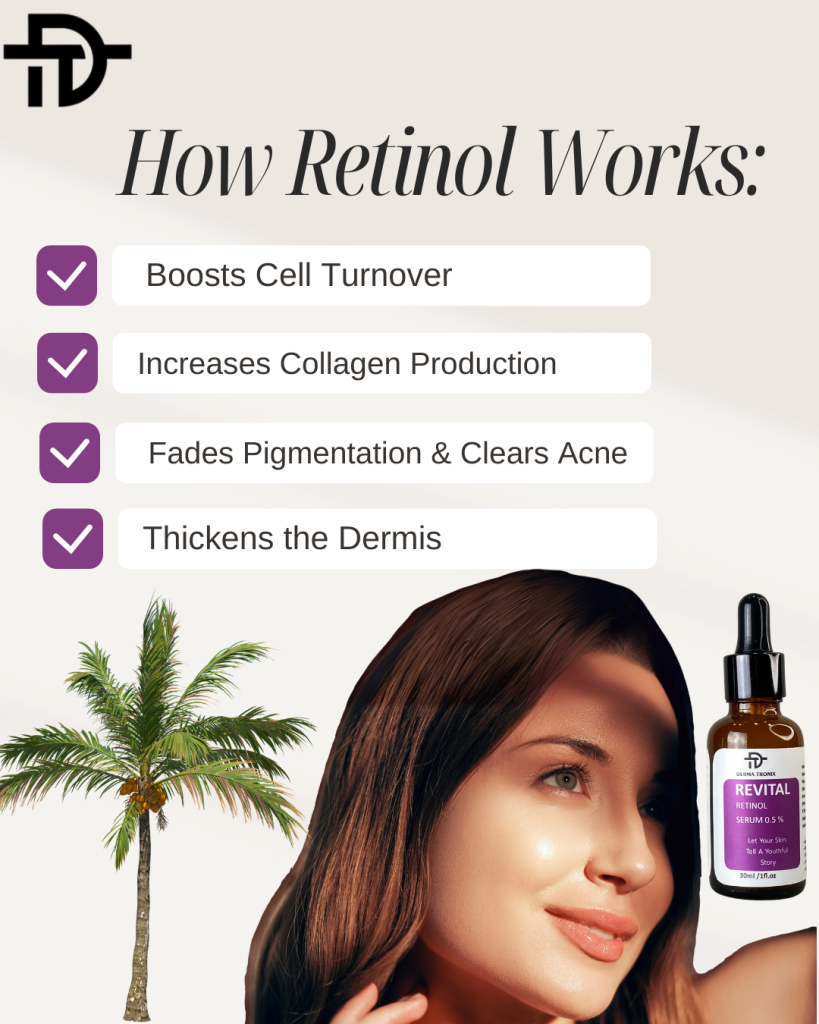
How Retinol Works: Deep Dive?
1. It promotes cell turnover. What does this mean?
The skin normally renews itself every 28 days for younger individuals. The process slows as you age, which causes dryness, blocked pores, and rough skin. Retinol speeds up the process by binding to retinoic acids (RARs)within the skin, which causes cells to divide and shed faster. What it does: It removes dead cells from the skin’s surface. This product helps reveal more youthful, smoother skin underneath, improves the absorption of active ingredients, and stops accumulation, which could result in blocked pores and breakouts. Visible results: Benefits include a smoother, more supple texture, luminous skin, and fewer wrinkles.
2. Increases collagen and elastin production. What It Means:
Collagen and elastin are structural proteins that give your skin firmness, elasticity, and plumpness. Collagen synthesis decreases by \1% every year beginning in your 20s, and enzymes such as MMPs (matrix metalloproteinases) tear down existing collagen.
What Retinol Does?
Retinol stimulates fibroblasts, the dermal cells responsible for collagen and elastin production. It inhibits MMP activity, which slows collagen degradation. Promotes the formation of glycosaminoglycans (such as hyaluronic acid), which help to maintain skin moisture and volume.
Result: Benefits include firmer, plumper skin, fewer deep wrinkles, and skin laxity—long-term structural improvement (not just on the surface).
3. Helps with pigmentation and Acne (Pigmentation):
The inequity of melanin synthesis can lead to hyperpigmentation. This includes sun spots, melasma, and post-inflammatory hyperpigmentation (PIH). Retinol lowers hyperpigmentation by regulating melanin synthesis and influencing melanocytes. Increases the turnover rate of pigmented cells by pushing them to the surface and away. Increasing the efficacy of other brightening agents(such as vitamin C or hydroquinone). (such as vitamin C and hydroquinone). Acne Retinol is a comedolytic that helps prevent and treat blocked pores. It reduces sebum production. Normalizes dead skin cells shed to reduce clogging. The product has moderate anti-inflammatory benefits. This can help against symptoms such as whiteheads, blackheads, inflammation of acne, and skin roughness or dark spots after acne. Results: Clear pores, Acne scars fade.
4. Thickens the Dermis (Deep Skin Layer). What does it mean?
Your skin’s middle layer, the dermis, offers structure and resilience. However, with ageing and UV exposure, the dermis becomes thinner, resulting in Features such as sagging, deep creases, and fragile, transparent skin.
🔁 Summary of Actions at Cellular Level:
| Effect | Target Cell/Process | Result |
|---|---|---|
| Cell turnover | Keratinocytes (epidermis) | Smoother, clearer surface |
| Collagen production | Fibroblasts (dermis) | Firmer skin, fewer wrinkles |
| Pigmentation | Melanocytes | More even tone |
| Acne prevention | Sebocytes + follicular keratinization | Fewer breakouts |
| Dermal support | Dermal matrix | Thicker, stronger skin structure |