
Something About Sunscreen?
Sunscreen is an essential skin care product that shields the skin from the damaging effects of ultraviolet (UV) radiation. Sunscreen is a skincare essential designed to protect the skin from the harmful effects of the sun’s ultraviolet (UV) rays. It acts as a shield, absorbing, reflecting, or scattering UV radiation to prevent it from penetrating the skin. Regular use of sunscreen helps to prevent sunburn and premature ageing (such as wrinkles and dark spots) and reduces the risk of skin cancer. Available in various forms like creams, gels, sprays, and sticks, sunscreens are formulated with different active ingredients to protect against UVA and UVB rays. Incorporating sunscreen into daily skin care routines — even on cloudy days or indoors — is crucial for maintaining healthy, youthful, and resilient skin over time.
🌞 1. Protects Against UV Radiation:
UVA Rays: Penetrate deep into the skin →, causing premature ageing, wrinkles, and fine lines.
UVB Rays Damage the skin’s outer layers →, cause sunburn, and can directly damage DNA, leading to skin cancer.
Sunscreen absorbs or reflects these rays, reducing cellular damage.
🛡️ 2. Reduces Risk of Skin Cancer:
Consistent sunscreen use significantly lowers the risk of all types of skin cancer, especially:
Melanoma (the most dangerous form)
Squamous cell carcinoma
Basal cell carcinoma
Skin cancer rates are directly linked to cumulative sun exposure without protection.
✨ 3. Prevents Premature Skin Aging:
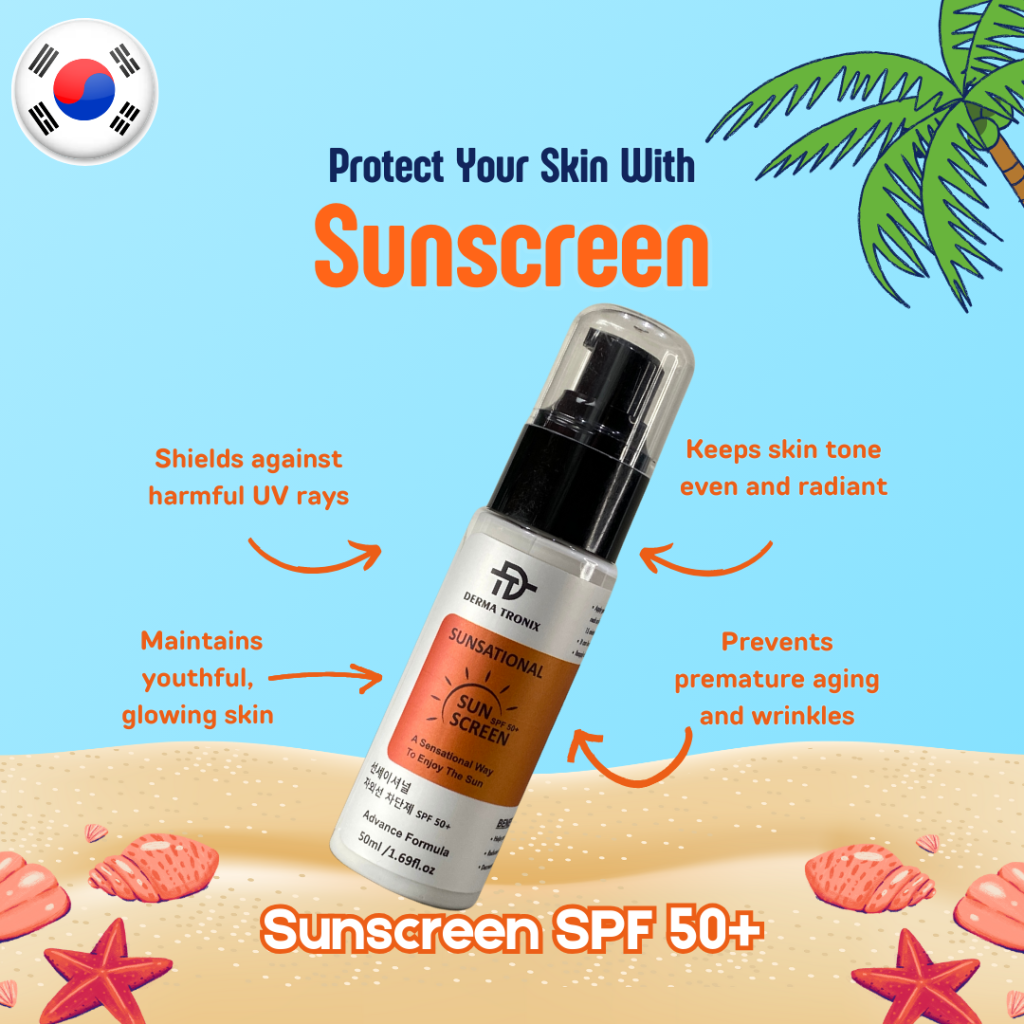
Sun exposure causes up to 90% of visible ageing (wrinkles, sagging, dark spots).
Sunscreen preserves collagen, elastin, and skin lipids, keeping skin firmer and youthful longer.
⚡ 4. Prevents Hyperpigmentation:
UV exposure worsens conditions like melasma, age spots, and post-inflammatory hyperpigmentation
hyperpigmentation (dark marks after acne).
Sunscreen protects by blocking the triggers that stimulate excess melanin production.
💧 5. Maintains Even Skin Tone and Texture:
Regular use helps prevent blotchiness, redness, and textural changes caused by sun
damage (like rough patches or broken capillaries).
🧬 6. Protects Essential Skin Proteins:
Collagen, elastin, and keratin are vital for skin strength, elasticity, and health.
UV exposure breaks these proteins down; sunscreen preserves them.
🌿 7. Supports the Skin’s Healing Process:
UV exposure can worsen scarring and prolong healing if you have wounds, acne, or cosmetic treatments (like laser microneedling).
Sunscreen shields healing skin, reducing scar formation and post-inflammatory
pigmentation.
🌎 8. Protects Against Environmental Stress:
Modern sunscreens often protect against UV rays, infrared radiation, blue light(from screens), and pollution.
Antioxidant-enhanced sunscreens neutralize free radicals, preventing cumulative
damage.
📜 Important Tips:
SPF 30 or higher is recommended for daily use. (SPF 50+ for intense exposure.) Broad Spectrum = protects against both UVA and UVB. Reapply every 2 hours, especially after sweating, swimming, or towel-drying.
Use even indoors — UVA penetrates windows.
Advant1ages:
- Prevents Sunburn: Using sunscreen may help avoid sunburn, which can be uncomfortable and raise your chances of developing skin cancer.
2. Lowers Skin Cancer chance: Using sunscreen regularly may lower your chance of developing skin cancer, especially melanoma, which is the most
deadly kind.
3. Prevents early Aging: Sunscreen helps shield the skin against fine lines, wrinkles, and age spots that come with early aging.
4. Guards Against UV Damage: Sunscreen shields the skin from UV rays, which may lead to discoloration and photoaging. Sunscreen Types.
5. Chemical Sunscreens: These sunscreens absorb UV radiation using chemical active ingredients such as oxybenzone or avobenzone.
Third, broad-spectrum sunscreens protect from UVA and UVB radiation.
How to Pick a SunblockSelect Broad-Spectrum Protection:
Seek sunscreens that protect against UVA and UVB radiation.
6. Pick a High SPF: Opt for a sunscreen with a minimum Sun Protection Factor (SPF) of 30.
7. Take Your Skin Type Into Account: Whether you have sensitive, dry, or oily skin, choose a sunscreen that works for you.
8. Apply Frequently: Ideally, you should apply sunscreen 15 to 30 minutes before you go outdoors—tips
for Applications
9. Use Adequate Sunscreen: Make sure to apply adequate sunscreen to all exposed skin.
10. Reapply Frequently: After swimming or perspiring, or every two hours, reapply sunscreen.
11. Remember Hard-to-Reach places: Use sunscreen on often disregarded places such as the back of your neck, the tops of your ears, and your nose. By adhering to these recommendations and consistently Using sunscreen, you can shield your skin from the damaging effects of the sun and lower your chance of developing skin damage and cancer. ↩︎
